
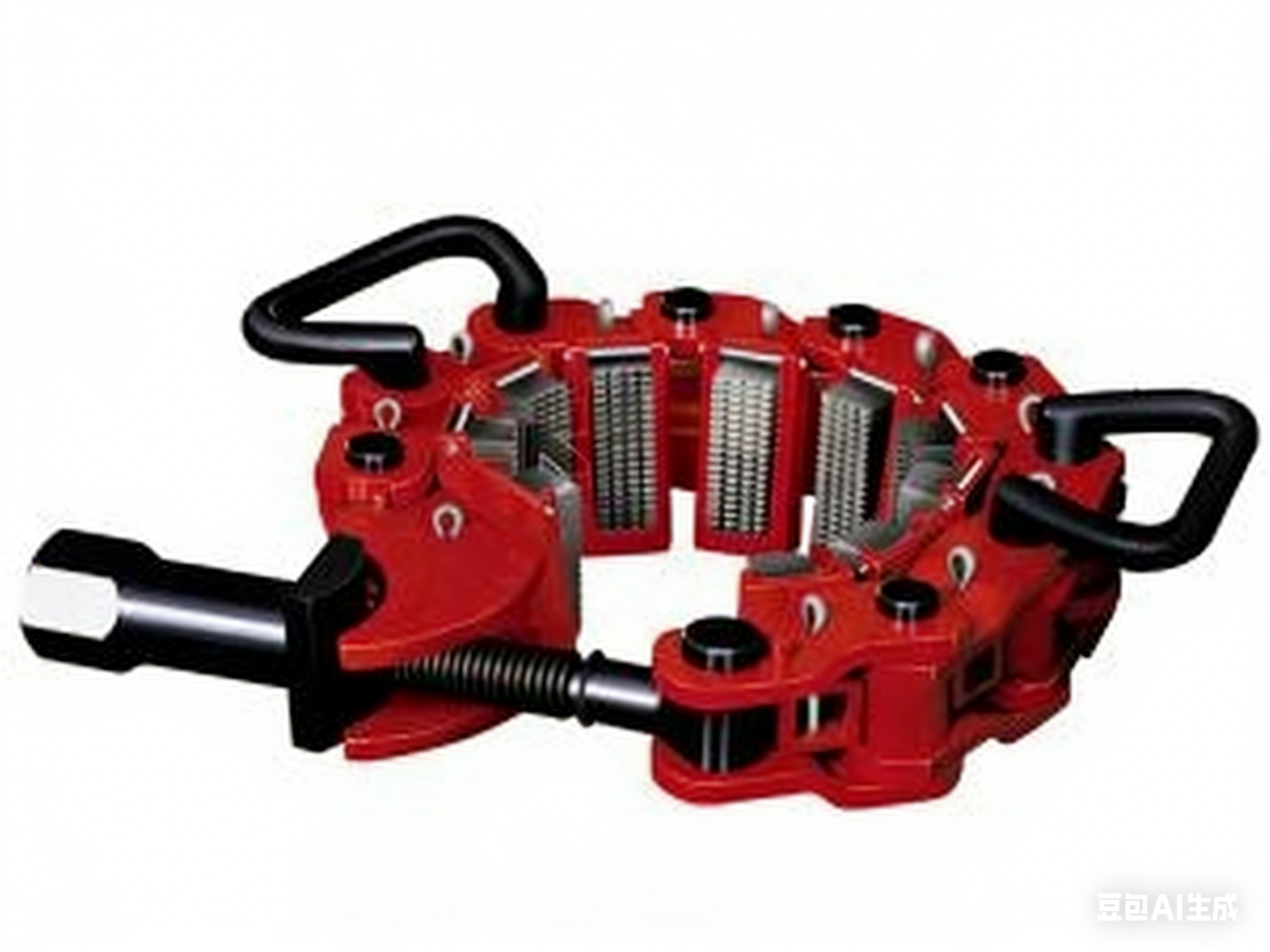
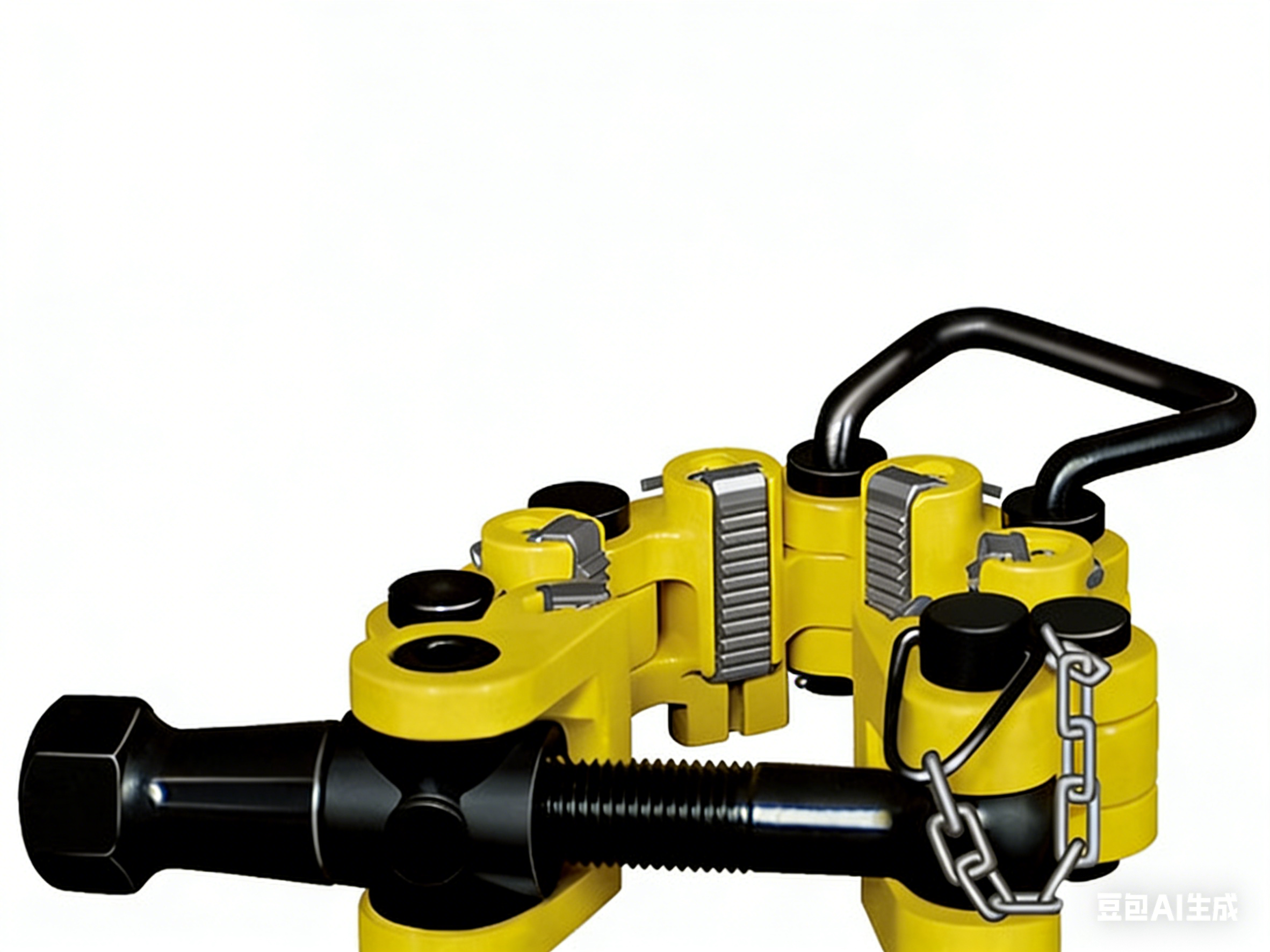
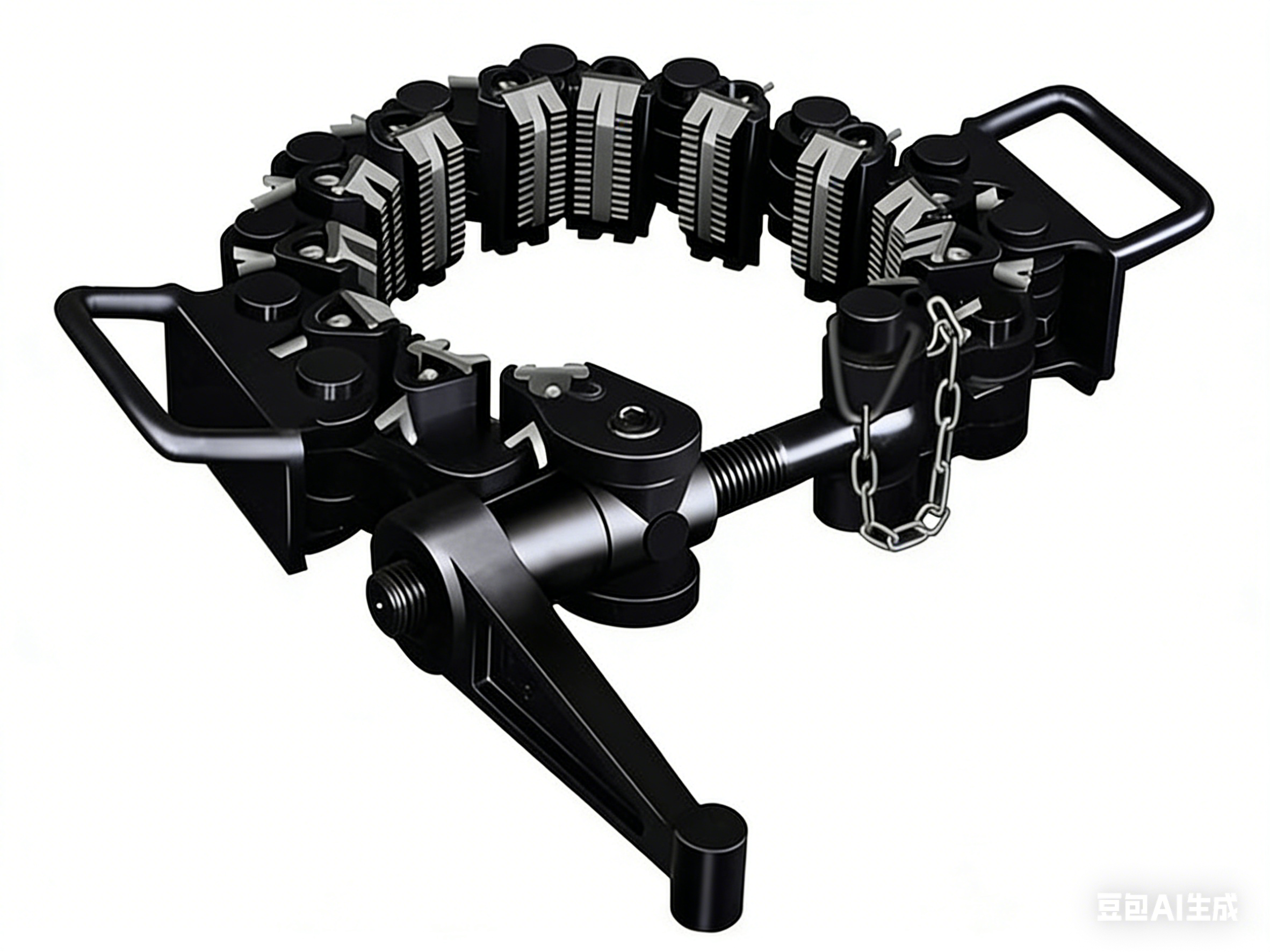
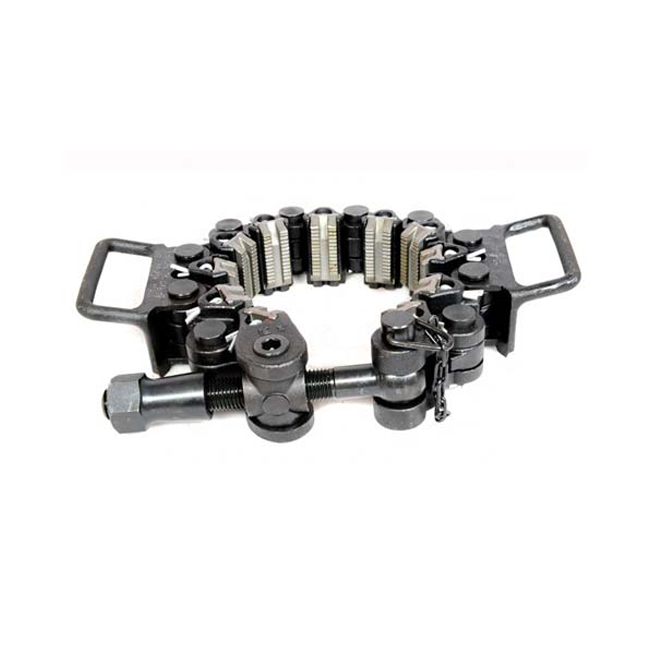
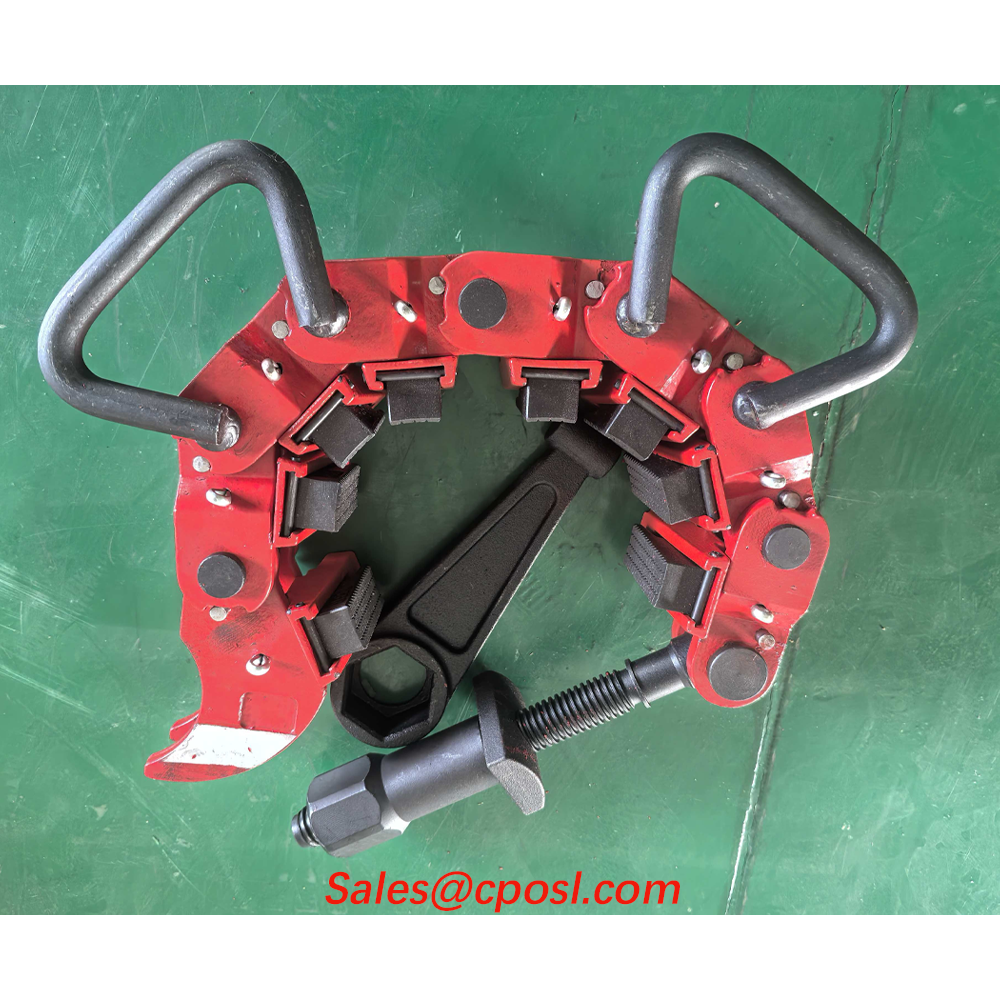
CAMTOP safety clamps are engineered for secure handling of drill collar, drill pipe, and tubulars in drilling and workover operations. Designed in accordance with API 7K, these clamps provide reliable backup holding through adjustable chain-link configurations, ensuring stable gripping performance under varying pipe diameters and operating conditions. Suitable for Type C, Type T, and MP series, they offer flexible selection based on load requirements, link quantity, and field application.
Oilfield Handling Tools
Safety Clamps for Drill Collar, Drill Pipe and Tubular Handling
An engineering-grade SEO article covering how to select Type C, Type T and MP safety clamps based on pipe diameter, chain link quantity, friction mechanics, hoop stress, operating conditions and practical field risk.

Quick answer: A safety clamp is a secondary retention device used to secure drill collar, drill pipe and other tubulars during drilling and workover operations. Proper selection depends on pipe diameter, chain link quantity, friction requirement, operating risk, and load transfer conditions, not on OD alone.
What Is a Safety Clamp?
A safety clamp is a backup holding tool designed to prevent unintended downward movement of tubulars when slips or elevators are disengaged, transitioning, or not yet fully carrying the load.
In practical oilfield operations, safety clamps are commonly used for drill collar, drill pipe, and other tubular handling applications where temporary retention, load arrest, and operational safety are required. From an engineering standpoint, a safety clamp is not a primary hoisting tool. It is a fail-safe retention mechanism that must generate sufficient circumferential pressure to resist slip under transient conditions.
Why Safety Clamp Selection Matters
A poorly selected safety clamp may still “fit” the pipe but fail to provide reliable gripping performance. In engineering terms, clamp selection is governed by both geometry and force transfer.
What can go wrong
- Insufficient gripping force
- Uneven circumferential pressure
- Local contact stress concentration
- Tubular slippage
- Pipe surface damage
What good selection achieves
- Stable backup retention
- Uniform load distribution
- Controlled hoop stress
- Reduced risk during transient events
- Improved operational safety
Safety Clamp Types: Type C, Type T and MP
CAMTOP safety clamps can be organized into three practical product groups for blog and SEO presentation: Type C, Type T, and Type MP. The MP series is further divided into MP-S, MP-R, MP-M, MP-L, and MP-XL to cover progressively larger tubular diameters.

Type C and Type T safety clamps are commonly used for drill collar and pipe handling over defined gripping ranges.
Type C and Type T Safety Clamps
Type C and Type T safety clamps are designed according to API Spec 7K principles and are widely used in drilling and workover operations for holding drill collar, drill pipe, and butt-joint tubulars. Their core design advantage lies in the adjustable chain-link structure, which allows field adaptation to different pipe diameters.
MP Safety Clamp
The MP series provides broader size coverage through modular chain-link configurations. It is especially useful where pipe OD varies significantly across operations, or where a structured series approach is preferred for field selection.

The MP series includes S, R, M, L and XL groups, enabling coverage across a wide tubular diameter range.
Key Engineering Factors for Safety Clamp Selection
From an engineering perspective, safety clamp selection is a multi-variable decision. Pipe diameter is only the first filter. Final selection should also consider the load path, friction requirement, chain-link configuration, risk level, and field operating intensity.
1. Pipe Outside Diameter
The first screening parameter is tubular outside diameter. Each clamp series has a defined gripping envelope, and selecting outside that range may create poor wrap angle, incomplete seating, or unstable pressure distribution.
2. Chain Link Quantity
Chain link quantity directly affects the clamp circumference and load distribution. It is not just a dimensional accessory. It is a structural variable that influences contact coverage and circumferential pressure uniformity.
3. Operating Condition
Clamp selection should consider whether the operation is standard land-rig work, high-frequency workover, offshore tubular handling, or a higher-consequence environment where repeatability and safety margin become more important.
4. Friction Condition
Mud, oil, and surface contamination reduce the available friction coefficient. Lower friction means the clamp must generate higher radial pressure to maintain the same holding capacity.
5. Transient Load Transfer
Even though safety clamps are backup holding tools, they may experience unexpected load transfer during slips release, slips setting, shock, or tubular movement. Selection should therefore account for transient effective load, not only nominal static weight.
Engineering Formulas Used in Selection
For blog content, it is best to keep the formulas simplified but meaningful. The goal is not to replace a formal design calculation package, but to explain the engineering logic behind clamp selection.
1. Friction Requirement
F_friction ≥ W_partial
To prevent slip, the available friction force must be greater than or equal to the potential transferred load.
μ × N ≥ W
Where:
- μ = friction coefficient between clamp and tubular surface
- N = total normal clamping force
- W = effective load to be restrained
2. Hoop Stress Relationship
σ = (P × D) / (2t)
Where:
- σ = hoop stress in the clamp body
- P = radial pressure
- D = pipe outside diameter
- t = effective clamp section thickness
3. Dynamic Load Amplification
W_effective = W_static × K_dynamic
This reflects the fact that actual load transfer during field operations may exceed static load due to movement, shock, and transient rig-floor events.
Engineering note: In real operations, safety clamp selection is fundamentally a friction-controlled load retention problem. The main question is not whether the clamp fits the OD, but whether it can generate adequate and stable circumferential pressure under actual operating conditions.
Practical Calculation Example
The following simplified example helps explain why pipe size alone is not enough for clamp selection.
Case: 8-1/4 in. Tubular Handling
- Pipe OD = 8.25 in.
- Estimated partial transferred load = 80 ton
- Mud-contaminated surface
- Assumed friction coefficient μ = 0.15
- Dynamic factor K = 1.30
Step 1 – Effective Load
W_effective = 80 × 1.30 = 104 ton
Step 2 – Required Friction Force
F_required ≥ 104 ton
Step 3 – Required Normal Clamping Force
N ≥ F / μ = 104 / 0.15 ≈ 693 ton
This simplified result shows that under low-friction and dynamic conditions, the clamp must generate a very high effective normal force. That is why chain link quantity, clamp geometry, and tightening consistency matter so much in practical selection.
Selection takeaway: Even when the pipe diameter appears moderate, a contaminated surface and dynamic operation can push the required clamp performance significantly higher. This is one reason why larger Type C or properly selected MP-series clamps are often preferred over minimal-fit options.
Technical Parameters
Below is a blog-friendly presentation of the main size coverage data for Type C, Type T and MP safety clamps.
Type C Series
| Model | Pipe Dia. (in.) | Chain Link Quantity |
|---|---|---|
| WA-C | 3 3/4 – 4 5/8 | 7 |
| WA-C | 4 1/2 – 5 5/8 | 8 |
| WA-C | 5 1/2 – 6 5/8 | 9 |
| WA-C | 6 1/2 – 7 5/8 | 10 |
| WA-C | 7 1/2 – 8 5/8 | 11 |
| WA-C | 8 1/2 – 9 5/8 | 12 |
| WA-C | 9 1/2 – 10 5/8 | 13 |
| WA-C | 10 1/2 – 11 5/8 | 14 |
| WA-C | 11 1/2 – 12 5/8 | 15 |
| WA-C | 12 1/2 – 13 5/8 | 16 |
| WA-C | 13 1/2 – 14 5/8 | 17 |
| WA-C | 14 1/2 – 15 5/8 | 18 |
Type T Series
| Model | Pipe Dia. (in.) | Chain Link Quantity |
|---|---|---|
| WA-T | 1 1/8 – 2 | 4 |
| WA-T | 2 1/8 – 3 1/4 | 5 |
MP Series
| Model | Pipe Dia. (in.) | Chain Link Quantity |
|---|---|---|
| MP-S | 2 7/8 – 4 1/8 | 7 |
| MP-S | 4 – 5 | 8 |
| MP-R | 4 1/2 – 5 5/8 | 7 |
| MP-R | 5 1/2 – 7 | 8 |
| MP-R | 6 3/4 – 8 1/4 | 9 |
| MP-R | 8 – 9 1/4 | 10 |
| MP-R | 9 1/4 – 10 1/2 | 11 |
| MP-M | 10 1/2 – 11 1/2 | 12 |
| MP-M | 11 1/2 – 12 1/2 | 13 |
| MP-M | 12 1/2 – 13 5/8 | 14 |
| MP-M | 13 5/8 – 14 3/4 | 15 |
| MP-M | 14 3/4 – 15 7/8 | 16 |
| MP-L | 15 7/8 – 17 | 17 |
| MP-L | 17 – 18 1/2 | 18 |
| MP-L | 18 1/8 – 19 3/8 | 19 |
| MP-XL | 19 3/8 – 20 3/8 | 19 |
| MP-XL | 20 3/8 – 21 1/2 | 20 |
| MP-XL | 21 – 22 5/8 | 21 |
| MP-XL | 22 5/8 – 23 3/4 | 22 |
| MP-XL | 23 3/4 – 24 7/8 | 23 |
| MP-XL | 24 7/8 – 26 | 24 |
| MP-XL | 26 – 27 1/8 | 25 |
| MP-XL | 29 3/8 – 30 1/2 | 28 |
Common Selection Mistakes
Selecting by OD only
Pipe size is important, but it is not sufficient. If chain link quantity, friction condition, or operating risk are ignored, the clamp may be under-selected.
Ignoring surface condition
Mud and oil can reduce friction sharply. The same clamp that performs well on a clean surface may not provide enough grip in contaminated field conditions.
Using the wrong series for the application
Type C, Type T and MP are not interchangeable in every condition. Proper selection depends on the required gripping envelope, chain-link range, and operating intensity.
Frequently Asked Questions
What is a safety clamp used for in oilfield operations?
A safety clamp is used to prevent unintended downward movement of drill collar, drill pipe, tubing and other tubulars during drilling and workover operations. It is typically used as a backup holding device rather than a primary hoisting tool.
How do you select the correct safety clamp?
Selection should be based on pipe outside diameter, chain link quantity, friction condition, operating environment, transient load risk and required safety margin. Proper selection is an engineering decision, not just a dimensional match.
Why is chain link quantity important?
Chain link quantity affects clamp circumference, wrap angle, contact distribution and gripping stability. It is one of the most important variables in practical selection.
What is the difference between Type C, Type T and MP safety clamps?
Type C and Type T safety clamps cover defined gripping ranges for common handling applications, while MP clamps use a staged series structure, including S, R, M, L and XL, to cover a broader diameter range with flexible chain-link adjustment.
Can a safety clamp damage the pipe?
Yes. Excessive tightening or poor clamp selection may create excessive local contact stress, which can mark or damage the tubular surface. The correct approach is to balance gripping force with tubular protection.
Safety Clamp
API 7K
Drill Collar
Drill Pipe
Tubular Handling
Oilfield Handling Tools

Reviews
There are no reviews yet.